
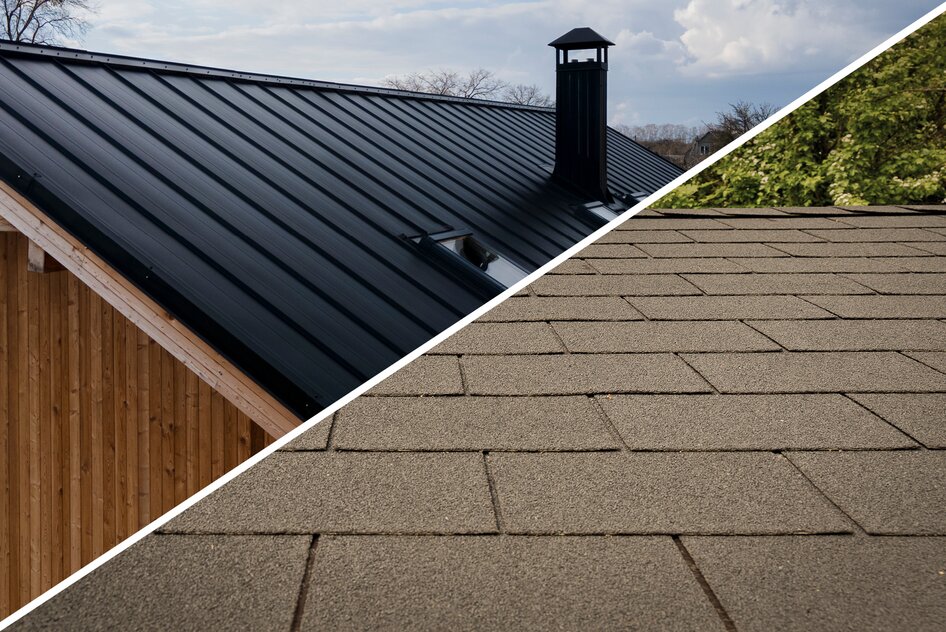
Replacing a roof is a big decision. The material you pick affects your energy bills, repairs, and how long the roof lasts. Central Virginia has hot summers and occasional ice and wind. Both asphalt shingles and metal roofing can handle that climate well.
Lifespan and Durability
Asphalt shingles are the most common roofing material in the country. They come in many styles and colors. Over time, they can curl, crack, or lose their granules. Granules are tiny mineral particles that protect the shingle from sun and rain.
Metal roofing is built to last longer. It holds up well against wind, hail, and moisture. That added toughness is worth considering for homeowners who deal with severe weather.
Energy Efficiency
This is where the two materials differ most. It matters a lot when summer cooling bills climb fast.
Dark asphalt shingles absorb a lot of heat. That raises attic temperatures and makes your air conditioner work harder. Research shows that dark asphalt shingles absorb solar energy at a rate of about 85%, while a light-colored metal roof absorbs as little as 30%. That gap can mean lower cooling costs for you.
Cool asphalt shingles close some of that gap. They use special coatings to reflect more sunlight than a standard shingle. According to the U.S. Department of Energy, cool asphalt shingles save energy across millions of homes, averaging meaningful savings per square foot of roof over the product's lifetime. They look nearly the same as a regular shingle.
Understanding ENERGY STAR and Cool Roof Ratings
When you shop for roofing, you may see ENERGY STAR labels and Solar Reflectance Index scores. These ratings help you compare products fairly.
Solar reflectance is the share of sunlight a surface bounces away. A higher number means a cooler roof. The ENERGY STAR cool roof guidelines set a minimum initial solar reflectance of 0.25 for steep-slope roofs like most homes have. Ask any contractor for the rated solar reflectance of the products they recommend. That gives you an easy, apples-to-apples comparison.
Aesthetic Options
Many people think metal roofing only suits modern homes. The product range is actually quite wide:
- Standing-seam panels for a clean, contemporary look
- Metal shingles shaped to look like asphalt, clay tile, or wood shake
- Unpainted metal for a farmhouse style
For the best energy performance, a factory-coated finish is the better pick. The U.S. Department of Energy notes that unpainted metal roofs absorb more heat than painted ones with the same reflectance rating, so a factory paint or mineral granule finish is usually the smarter choice.
Asphalt shingles remain flexible for matching neighborhood styles. Architectural shingles can mimic the look of slate or wood shake at a lower weight.
Maintenance Considerations
Both materials need periodic inspection, especially after storms.
Asphalt shingles:
- Algae and moss can build up over time. Use a cleaning agent and a soft brush to remove growth gently.
- Avoid power washing. High-pressure spray dislodges granules that protect the roof from UV rays and water. Once those granules are gone, the shingle wears out faster.
- Check for cracked, curling, or missing shingles after any major storm.
Metal roofing:
- Metal roofs need very little upkeep and last much longer than asphalt.
- Keep other metals away from your metal roof. Contact between different metals can cause rapid rust through a reaction called bimetallic corrosion.
For both materials:
- Check for damaged, loose, or missing shingles or panels. Also check the flashing—thin metal strips that direct water away from chimneys and joints.
- Do not walk on your roof. Falls are the leading cause of fatalities on job sites, even for trained workers. Inspect from the ground with binoculars or from the top of a ladder.
- Keep gutters clear and make sure your attic is well ventilated. Both steps help any roof last longer.
Upfront Cost vs. Long-Term Value
Metal roofing costs more upfront than asphalt. Its longer life and lower maintenance can offset that over time. Whether the math works for you depends on how long you plan to stay in the home.
Energy savings also vary by home. The cool roof savings guide notes that results depend on your climate, attic insulation, and HVAC efficiency. A local contractor can help you estimate the real-world impact for your property.
If you plan to sell within a few years, a quality cool asphalt shingle roof may deliver better near-term value. If you are staying long-term, metal roofing's extended life and energy performance can make the higher upfront cost worthwhile.
What This Means for Central Virginia Homeowners
Central Virginia summers are hot and humid. Winters can bring ice and wind. Both asphalt and metal roofing handle this climate well when properly installed and maintained.
The better question is not which material is best overall. It is which one fits your home, your style, and your long-term plans. A qualified local contractor can walk through those specifics with you.
Sources
Guidelines for Selecting Cool Roofs – U.S. Department of Energy
Moisture-Safe Unvented Roofs – U.S. Department of Energy Building America
Talk With Rempfer Construction
Concerned about your roof or planning a replacement? Rempfer Construction can help you understand the next step with a free, no-obligation estimate.